
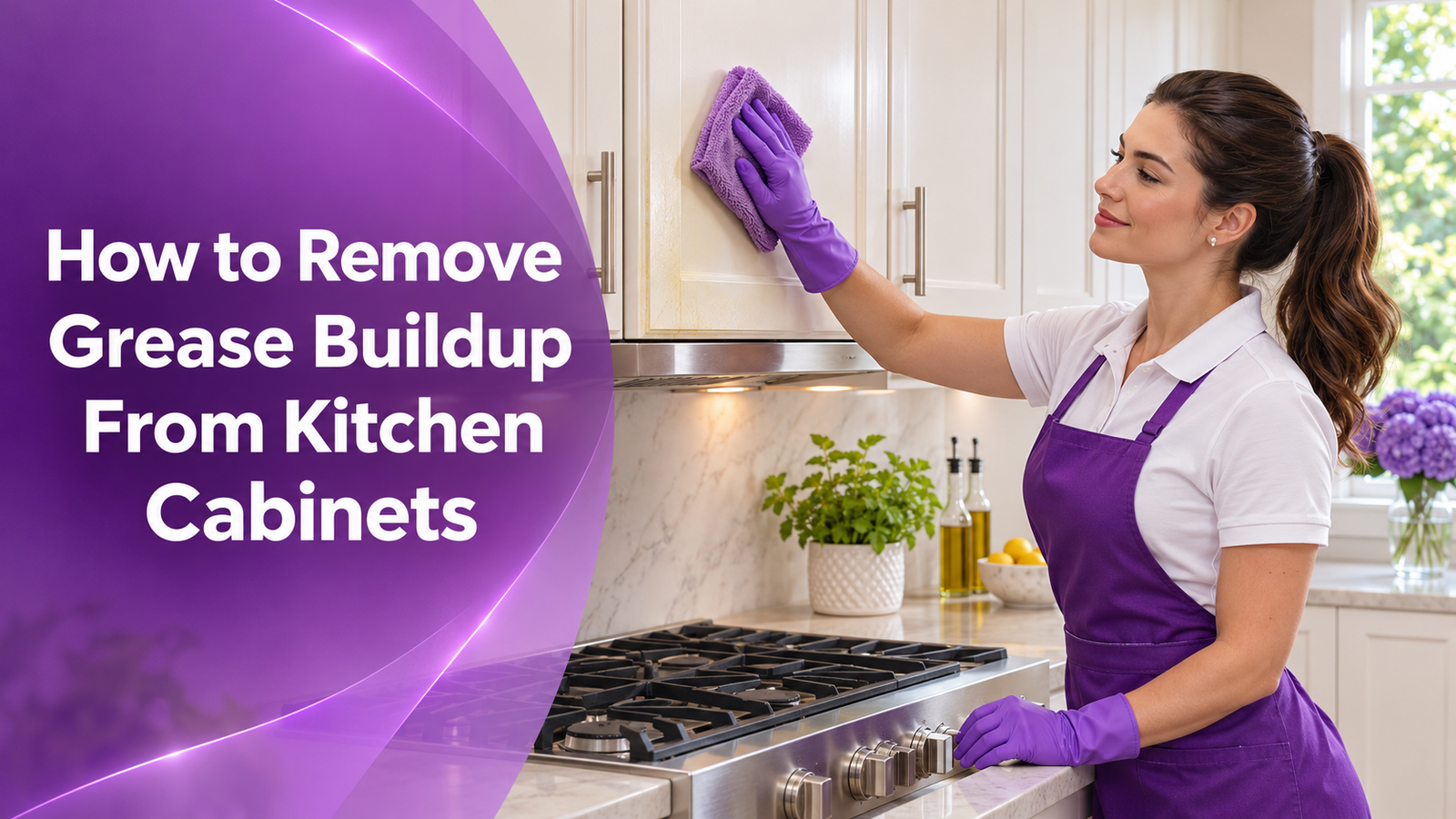
Kitchen cabinets can become greasy even when you clean your kitchen regularly. Cooking releases oil and grease into the air, and these particles settle on cabinet doors, handles, and surfaces near the stove. Over time, the residue attracts dust and becomes sticky, making cabinets look dull and harder to clean. If you want to keep your kitchen in good condition, regular maintenance and the right cleaning methods can make a noticeable difference. You can also explore Brilliant Maids’ cleaning services for help maintaining a clean home.
What Causes Grease Buildup on Kitchen Cabinets?
Grease buildup usually develops when cooking oils, food splashes, and airborne particles settle on cabinet surfaces. Cabinets close to stovetops and ovens are particularly likely to collect residue because they are exposed to heat and cooking vapours.
If grease is not removed regularly, it can mix with dust and form a stubborn layer that ordinary wiping may not remove. Certain cabinet finishes can also show fingerprints and oily marks more easily than others.
The best way to remove grease is to start with a gentle cleaning solution and increase its strength only when necessary. Using harsh products too quickly can damage paint, wood, laminate, or the cabinet’s protective finish.
How to Remove Grease Buildup From Kitchen Cabinets
1. Start With Warm Water and Dish Soap
For light grease, warm water and a few drops of mild dish soap are often enough. Dish soap helps loosen oily residue without requiring strong chemicals.
Mix the soap with warm water, dampen a soft microfiber cloth, and wipe the cabinet surface gently. Pay attention to areas around handles and the cabinet doors closest to the stove.
Avoid soaking the cabinets, especially if they are made from wood or have exposed edges. Once the grease has lifted, wipe the surface with a clean, damp cloth to remove any soap residue. Dry it immediately with a soft towel.
2. Use a Baking Soda Paste for Stubborn Grease
If the grease does not come off with soapy water, baking soda may help loosen the remaining residue. However, because it is mildly abrasive, it should only be used on finishes that can tolerate it.
Mix a small amount of baking soda with water to create a soft paste. Test it on a hidden area first, then gently work it over the greasy spot with a soft cloth. Avoid scrubbing hard, as this may dull painted or glossy finishes.
Wipe away the paste with a clean, damp cloth and dry the surface thoroughly. If the cabinet finish looks scratched or changes colour during testing, stop and use a gentler method.
3. Clean Cabinet Handles and Corners
Cabinet handles, knobs, and the edges of doors often collect more grease than the flat surfaces. These areas receive frequent contact from hands, which can transfer oils and food residue.
Use a soft cloth dipped in a mild dish soap solution to clean around handles and in accessible corners. For narrow gaps, a soft toothbrush can help reach the residue without scratching the surface.
If the handles are made from brass, copper, or another delicate material, check the manufacturer’s cleaning recommendations before using any product.
4. Choose a Suitable Cleaner for Your Cabinet Material
Different cabinet materials need different care. A cleaner that works well on laminate may not be appropriate for unfinished wood or a painted finish.
- Wood cabinets: Use a small amount of mild soap and water, then dry immediately. Avoid excessive moisture.
- Painted cabinets: Start with a soft cloth and gentle detergent. Strong chemicals and abrasive scrubbing can damage the paint.
- Laminate cabinets: Wipe with a mild cleaning solution and dry with a clean cloth. Avoid abrasive pads.
- Glossy cabinets: Use a soft microfiber cloth and a finish-safe cleaner to prevent scratches and streaks.
Always check the manufacturer’s care instructions and test a new product in an inconspicuous spot before cleaning the entire surface.
5. Remove Grease From Cabinet Tops
The tops of kitchen cabinets are easy to overlook because they are often out of sight. However, airborne grease can settle there and combine with dust, creating a thick, sticky layer.
First, remove loose dust with a suitable duster or vacuum attachment. Then wipe the surface with a cloth dampened with a compatible cleaning solution. For heavy buildup, you may need to repeat the process rather than scrub aggressively.
Use a stable step stool when necessary, and avoid reaching from an unsafe position. If the cabinets are difficult to access, consider asking for assistance.
How to Clean Different Types of Grease Buildup
|
|
|
|
|
|
|
|
|
|
|
|
|
|
|
|
|
|
|
|
|
|
|
|
|
|
|
|
How to Prevent Grease From Building Up Again
Once your cabinets are clean, a few simple habits can help keep them that way.
Wipe surfaces regularly. Clean cabinet doors near the stove whenever you notice oily marks. Removing fresh grease is usually easier than dealing with a thick layer later.
Use your range hood. Switch on the extractor fan while cooking, particularly when frying or preparing food at high temperatures. Clean its filters according to the manufacturer’s instructions.
Keep cooking splashes under control. Use suitable splatter guards when frying and wipe up food spills promptly.
Clean cabinet handles frequently. These areas collect oils from hands, so a quick wipe during routine kitchen cleaning can help prevent sticky residue.
Include cabinet tops in your cleaning schedule. Add them to a weekly or monthly checklist depending on how quickly dust and grease accumulate in your kitchen.
Common Mistakes to Avoid When Cleaning Kitchen Cabinets
Using too much water is one of the most common mistakes, particularly with wood cabinets and surfaces with exposed edges. Excess moisture can cause swelling, damage, or peeling over time.
Another mistake is applying strong degreasers without checking whether they are safe for the finish. Products containing harsh solvents or abrasive ingredients may strip protective coatings or change the appearance of painted surfaces.
Avoid steel wool, rough scouring pads, and vigorous scrubbing. These methods can leave scratches that are difficult to repair. Never mix cleaning products, and always follow the instructions on the product label.
If grease remains after several gentle attempts, check the cabinet manufacturer’s recommendations before trying a stronger solution.
Frequently Asked Questions
1. What is the easiest way to remove grease from kitchen cabinets?
Start with warm water and a small amount of mild dish soap. Wipe the cabinets with a soft cloth, rinse away the residue using a clean, damp cloth, and dry the surface. For stubborn grease, use a cleaner approved for the cabinet material.
2. Can vinegar remove grease from kitchen cabinets?
Vinegar may help with some kitchen residue, but it is not suitable for every cabinet finish. Its acidity can damage certain coatings and natural materials. Check the manufacturer’s guidance and test any approved cleaner in a hidden area first.
3. How often should kitchen cabinets be cleaned?
Cabinets near the stove may need wiping several times a week, depending on how often you cook. Other cabinet surfaces may only need weekly or occasional cleaning. Regular light maintenance helps prevent stubborn grease from developing.
4. Can I use a degreaser on painted cabinets?
Some degreasers are suitable for painted cabinets, but others may dull or damage the finish. Choose a product specifically approved for painted surfaces, follow its instructions, and test it in an inconspicuous area before use.
5. Why do kitchen cabinets feel sticky after cleaning?
Sticky cabinets may have leftover grease, soap residue, or cleaner that has not been fully removed. Wipe the surface again with a clean cloth dampened with water, provided the finish allows it, and dry thoroughly. If the stickiness continues, check the product instructions and cabinet care recommendations.
Final Thoughts
Grease buildup on kitchen cabinets is common, particularly around cooking areas, but regular maintenance can keep it under control. Start with mild cleaning solutions, use products suited to your cabinet material, and avoid excessive moisture or abrasive tools.
By cleaning small spills promptly and including cabinet doors, handles, and tops in your routine, you can keep your kitchen looking cleaner for longer. If household cleaning becomes difficult to manage, explore the cleaning services available through Brilliant Maids to find an option that suits your needs.